Powered By Blogger

Thursday, January 27, 2011

5 Random Favourite Photos


Portrait Project


Different Sides : Serious Scary Artistic Lazy Goofy


 -Serious- No. 1 ~ 6
-Scary- No. 7 ~ 11
-Artistic- No. 12 ~ 13
-Sleepy- No. 14 ~ 15
-Goofy- No. 16 ~ 20


4 Favourite Pictures


Composition Definitions and Examples

LEADING LINES
Lines within an image that leads the eye to another point in the image, or occasionally, out of the image. Anything with a definite line can be a leading line.


RULES OF 3RD
An imaginary grid drawn across a photo area that breaks the image into nine equal squares. The best focal point for subjects is at the intersection of these lines with secondary emphasis being seen along the lines themselves.


FRAMING
A technique where items being photographed are used as internal frames.


REPITITION
Grabbing attention of your audience and draw them into the image. Repeating a shape throughout your photo gives instant composition.


CONTRAST
Determined by the difference between light and dark tones in a scene.

Elements of Design Examples

Colour

Form

Line

Shape

Texture

Portrait Examples


Wednesday, January 5, 2011

"News" Photo

This picture is my favourite becuase the woman's expression is very strong and..sad.
The event is about the Haiti earthquake and she was trying to keep the people from stealing her possesions.
The image explains that people have nothing to lose anymore and they have to at least have something by stealing. They are actually nice people, but they are having such a hard time that they are forcing themselves to do the wrong thing.
The main focus subject in this picture is the woman trying to escape with her belongings. Her facial expressoin emphasizes how she feels like.
Rules of third.


It is my favourite photo becuase even though it is just a picture of a person's feet, there's alot of meaning in it.
This event is about an African man who crossed illegally into Israel from Egypt, and he sits on the ground after being detained by the Israel's military.
The image tells the story because the man has to do anything to eat or live, so to protect his feet, he wears any shoe he finds.
I think the main subject is how the man is dressed becuase that really impacts his life and the situation.
Rules of third

Wednesday, December 8, 2010

Shutter

Shutter-a mechanical device on a camera that opens and closes to control the time of a photographic exposure

Shutter Speeds (write out the speeds and explain what they mean)- 1/1000 s, 1/500 s, 1/250 s, 1/125 s, 1/60 s, 1/30 s, 1/15s,  1/8 s, 1/4 s, 1/2 s, 1 s.      
Shutter speed is the amount of time that the shutter is open.

Shutter Priority- Shutter priority refers to a setting on some cameras that allows the user to choose a specific shutter speed while the camera adjusts the aperture to ensure correct exposure.

Exposure & how to set your camera for a good exposure- Exposure is the total amount of light allowed to fall on the photographic medium (photographic film or image sensor) during the process of taking a photograph. There are two components of exposure: brightness and duration.
Your camera’s metering system thinks of everything as 18% gray. The "Zone System: can be very helpful in getting a good exposure on a digital camera. If you want your camera to make exposure decisions for you, then you can use matrix metering.

Bulb- It is a shutter speed setting on an adjustable camera that allows for long exposure times under the direct control of the photographer. The shutter simply stays open as long as the shutter release button remains depressed.

Cable Release-The are the mechanisms attached to cameras that allow photographers to snap photos from a distance. The are generally attached to a camera atop a tripod, a cable release consists of a wire, extending from the camera, that has a button trigger at the end of it. The photographer holds the button end of the cable and presses to trigger the camera shutter to take a photo.

Tripod- It is used to stabilize and elevate a camera, or to support flashes or other photographic equipment.
Light Meter- Device used to measure the amount of light. It is often used to determine the proper exposure for a photograph.

Bracketing- It is the general technique of taking several shots of the same subject using different or the same camera settings. It is useful and often recommended in situations that make it difficult to obtain a satisfactory image with a single shot, especially when a small variation in exposure parameters has a comparatively large effect on the resulting image.

Hot Shoe- It is a mounting point on the top of a camera to attach a flash unit.

-----------------------------------------------------------------------------------------------------------
                                                            SLOW SHUTTER SPEED- (8-30)

PANNING- (60-250)

                                                           PAINTING WITH LIGHT- (1[?])
                                                     
                                                            MULTIPLE EXPOSURES- (125)

                                                             FAST SHUTTER SPEED - (1000)


Wednesday, November 24, 2010

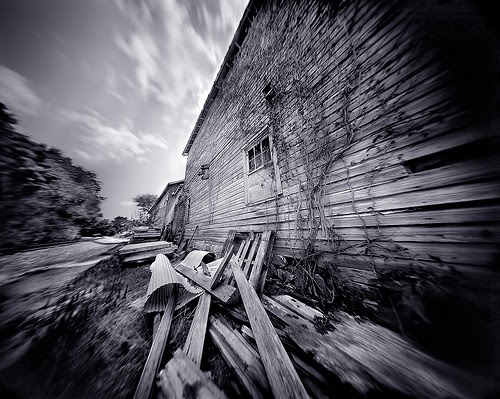
Pin Hole Camera

2 Examples Of Pin Hole Cameras


5 Examples of Pin Hole Camera Pictures


What is a pinhole camera?

A pinhole camera is a simple camera without a lens and with a single small aperture — effectively a light-proof box with a small hole in one side.

How does a pinhole camera work?

Light passes through a light-proof container through a tiny hole. The light streams through the box and projects an image on the back of the box's interior, to which a piece of film has been affixed. An image then develops on the face of the film much in the same way that it does in a typical 35mm film camera.
Smaller holes will result in sharper images, and larger holes will create more diffuse images. The size of the hole also determines the amount of light exposure necessary to develop the image: smaller holes will require longer exposures, and larger ones will require shorter exposures.


Wednesday, October 6, 2010

Parts Of Camera

  1. SLR- its a camera that uses a semi-automatic mirror system that lets the photographer see what will be captured by the film.
  2. TLR-there are u objective lenses with the same focal length.
  3. Lens-an optical element which converges or diverges light.
  4. Shutter-its a device that lets light pass for a chosen period of time for the prupose of exposing photographic film.
  5. Shutter speed control-The camera control that selects the length of time the film is exposed to light.
  6. Aperture-is a hole or an opening through which light travels.
  7. ASA-Abbreviation for American Standards Association, the film speed rating system in general use before the ISO standard was internationally adopted.
  8. ASA Dial-on cameras without a built-in winder, is a kind of multi-function knob.
  9. Shutter Button-button found on many cameras, used to take a picture. When pressed, the shutter of the camera is "released", so that it opens to capture a picture, and then closes, allowing an exposure time as determined by the shutter speed setting.
  10. Rewind Knob-Usually rest around the pentaprism of the camera. It has an electrical contact which mated with a contact in the mounting foot of the flash unit.

Photoshop Portrait

Monday, October 4, 2010

Surveillance Project

Where did you set up your camera first?
The camera was half hidden in my jacket pocket, and when I was taking a picture of classrooms, I put the camera on the corner of the windows.
Why did you select the area to survey?

I selected the areas that I took because it was a place where people were concentrated on something else which was easy for me to take a surveillance shot.

How long did you remain in the same area?

I stayed at the same area not for a long time. I just took the picture and went right away because I did not want people to know that I was taking a picture of them.

What sort of images did you capture?

I captured images of people working or walking.
  
Were you satisfied with the results? Why or why not?

I was not really satisfied with my work because since I was walking while taking photos, most of them shook and then I had to delete them.

Describe your favorite image; explain why it is your favorite.

I like this because it really shows what she feels like in science class and it shows that she does not enjoy doing science.

How did people react to you?

Most people knew I was doing surveillance because everyone had their cameras taking pictures of people so they didn’t act like I was some creeper trying to take a picture of them.

How did you feel while you were taking the photos?

It was actually pretty fun because it was funny when people found out I was taking a picture of them and I would run away laughing. Also, I felt like a stalker.